In-Person POS & Business Card

My Role

UX Designer

Platform

Desktop

Date

May 2023-Dec 2023 (Business Card) Nov 2024- Present (In-Person Payment)

Tools

Figma, Figjam & Microsoft Clarity
Project Overview

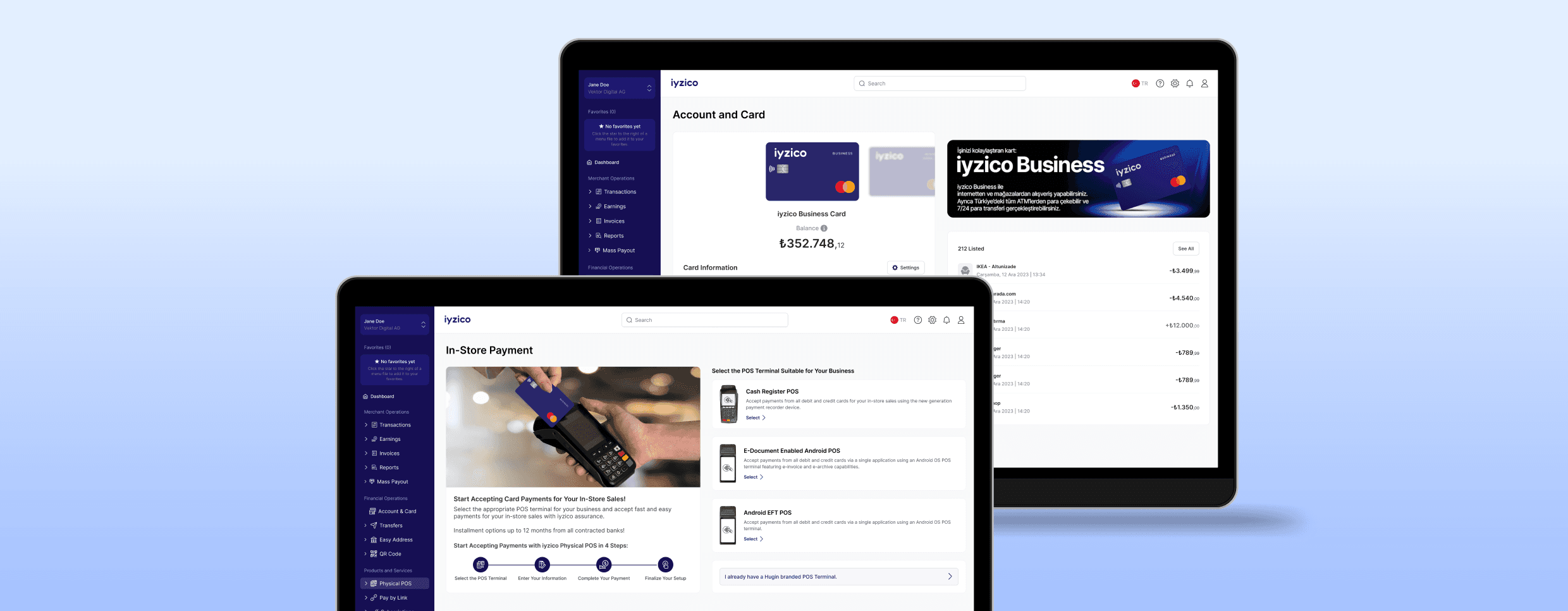
This case focuses on SME light banking features that directly bridge digital financial products with real-world, physical experiences. Both the Business Card and In-Person Payments (Physical POS) initiatives extended the product beyond screens, into moments where merchants and end users interact face-to-face with financial services. Unlike purely digital products, these initiatives influenced service design, onboarding flows, and physical touchpoints, requiring a broader product design perspective.

Objectives

• Enable SME banking experiences that work seamlessly across digital and physical contexts • Reduce friction in complex, regulation-heavy merchant onboarding flows (Business Card instead of getting done Digital Onboarding) • Design product pathways that align legal, operational, and user realities • Support scalable SME adoption through alternative entry points into the ecosystem

Role & Responsabilities

In this project, I worked as a Product Designer with a strong focus on system-level thinking and service design, shaping how digital banking products extend into the physical world. My key contributions were centered around: 1. Physical–Digital Experience Design • Designing and evaluating product decisions that affect real-world interactions, such as physical card usage and in-person payments • Ensuring coherence between what users experience on-screen and what they experience in hand or face-to-face • Considering both merchant and end-user perspectives in shared physical contexts 2. Service & Systems Thinking • Contributing to the design of end-to-end service flows that go beyond UI, including onboarding, verification, and activation moments • Identifying how physical verification points could responsibly unlock digital capabilities • Helping align product flows with operational and regulatory constraints without breaking user trust 3. Merchant Onboarding Impact • Playing a role in shaping how physical products (Business Card) could act as an alternative and supportive entry point into complex digital onboarding journeys • Addressing a key SME challenge: unlike individual users, merchants require onboarding of legal representatives, which is often difficult to complete purely digitally • Contributing to a solution where in-person identity verification enabled smoother onboarding and reduced drop-offs in the digital flow 4. Product Decision-Making in Regulated Contexts • Participating in critical product discussions where legal, operational, and technical constraints directly influenced design decisions • Helping balance regulatory compliance with usability in high-stakes financial flows

In this project, I worked as a Product Designer with a strong focus on system-level thinking and service design, shaping how digital banking products extend into the physical world. My key contributions were centered around: 1. Physical–Digital Experience Design • Designing and evaluating product decisions that affect real-world interactions, such as physical card usage and in-person payments • Ensuring coherence between what users experience on-screen and what they experience in hand or face-to-face • Considering both merchant and end-user perspectives in shared physical contexts 2. Service & Systems Thinking • Contributing to the design of end-to-end service flows that go beyond UI, including onboarding, verification, and activation moments • Identifying how physical verification points could responsibly unlock digital capabilities • Helping align product flows with operational and regulatory constraints without breaking user trust 3. Merchant Onboarding Impact • Playing a role in shaping how physical products (Business Card) could act as an alternative and supportive entry point into complex digital onboarding journeys • Addressing a key SME challenge: unlike individual users, merchants require onboarding of legal representatives, which is often difficult to complete purely digitally • Contributing to a solution where in-person identity verification enabled smoother onboarding and reduced drop-offs in the digital flow 4. Product Decision-Making in Regulated Contexts • Participating in critical product discussions where legal, operational, and technical constraints directly influenced design decisions • Helping balance regulatory compliance with usability in high-stakes financial flows

In this project, I worked as a Product Designer with a strong focus on system-level thinking and service design, shaping how digital banking products extend into the physical world. My key contributions were centered around: 1. Physical–Digital Experience Design • Designing and evaluating product decisions that affect real-world interactions, such as physical card usage and in-person payments • Ensuring coherence between what users experience on-screen and what they experience in hand or face-to-face • Considering both merchant and end-user perspectives in shared physical contexts 2. Service & Systems Thinking • Contributing to the design of end-to-end service flows that go beyond UI, including onboarding, verification, and activation moments • Identifying how physical verification points could responsibly unlock digital capabilities • Helping align product flows with operational and regulatory constraints without breaking user trust 3. Merchant Onboarding Impact • Playing a role in shaping how physical products (Business Card) could act as an alternative and supportive entry point into complex digital onboarding journeys • Addressing a key SME challenge: unlike individual users, merchants require onboarding of legal representatives, which is often difficult to complete purely digitally • Contributing to a solution where in-person identity verification enabled smoother onboarding and reduced drop-offs in the digital flow 4. Product Decision-Making in Regulated Contexts • Participating in critical product discussions where legal, operational, and technical constraints directly influenced design decisions • Helping balance regulatory compliance with usability in high-stakes financial flows

Outcome

• Strengthened the connection between physical financial products and digital banking experiences • Helped reduce friction in SME onboarding by introducing viable, regulation-compliant physical touchpoints • Contributed to improved merchant activation and engagement by offering alternative onboarding pathways • Supported a more holistic SME banking ecosystem rather than isolated feature-level solutions